

November 7, 2025
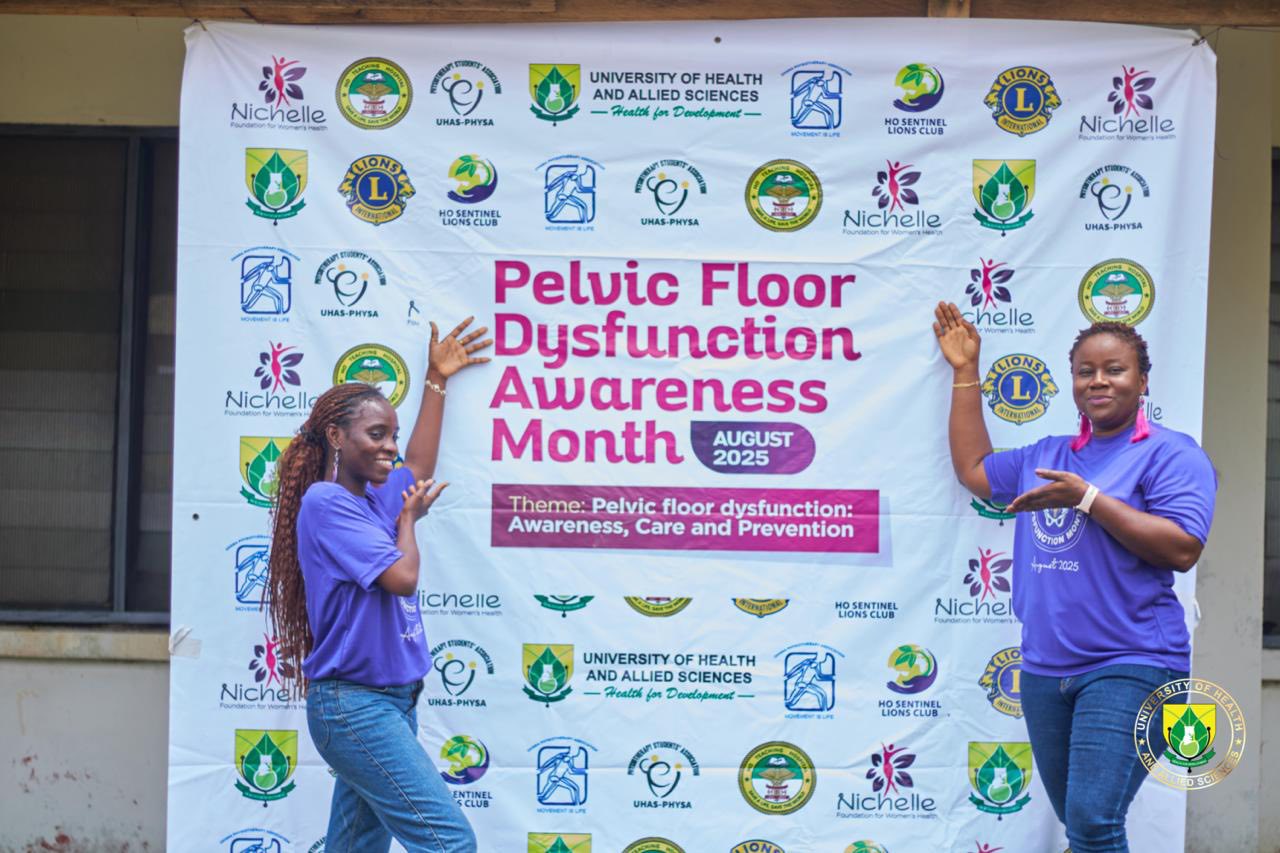
The University of Health and Allied Sciences (UHAS) in conjunction with Nichelle Foundation for Women’s Health and Ho Teaching Hospital (HTH) have successfully concluded a series of educational programmes as part of this year’s Pelvic Floor Dysfunction (PFD) Awareness Month observation, reaching pregnant women across three major healthcare facilities in the Volta Region.
The pelvic floor is a complex group of muscles, ligaments and fascia that line the pelvis and support vital organs in the female anatomy. PFD occurs when the muscles and nerves are unable to function properly, adversely affecting the support of organs like the bladder and intestines, among others. Stigma and geographical challenges often prevent discussions on this crucial health condition. For this reason, the month of August is set aside globally for the creation of awareness on this deadly health challenge.
The programme which was under the theme ‘Pelvic Floor Dysfunction: Awareness, Care and Prevention’, saw dedicated education sessions conducted at Ho Polyclinic, Ho Municipal Hospital and Worawora Government Hospital, between August 15 and 28, 2025.
Ms. Ellen Mensa-Bonsu, a Lecturer in the Department of Physiotherapy at UHAS School of Allied Health Sciences, served as the Primary Resource Person for the campaign. She was supported by fellow faculty members, UHAS Physiotherapy students and healthcare practitioners from the target facilities.
The campaign highlighted pelvic floor dysfunction types like pelvic pain, painful intercourse, urinary retention, constipation and pelvic organ prolapse. The facilitators also seized the opportunity to offer some practical solutions to the health problem. The participants were taken through varied Kegel exercises, believed to be effective interventions for strengthening pelvic floor muscles, improving sexual function, maintaining continence and providing structural support to the vagina, bladder, uterus and rectum.
The campaign featured interactive sessions that allowed the participants, who were mainly pregnant women, to engage directly with the facilitators.
The initiative demonstrates the University’s commitment to extending its mission beyond its students, directly impacting community health outcomes across its catchment areas. It represents a significant step forward in maternal healthcare education, addressing critical knowledge gaps whilst promoting open dialogue about women's health issues that have historically been shrouded in silence.